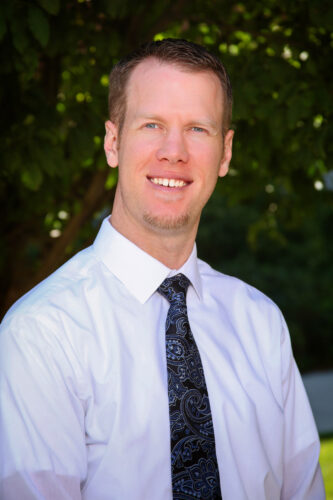
Mike Pascoe is the President of the Lafayette History Museum in Lafayette, Colorado and associate professor at the University of Colorado Anschutz Campus.
When I enrolled in one of Wiki Education’s 250 by 2026 Wiki Scholars courses, I expected to learn how to edit Wikipedia more effectively. What I did not expect was how quickly the work would evolve into something that felt much closer to public scholarship than a typical academic exercise.
Like many first-time editors, I initially found Wikipedia’s systems and expectations difficult to navigate. Writing for Wikipedia is not the same as writing for an academic journal. It requires a strict adherence to verifiability, a neutral point of view, and a reliance on high-quality secondary sources. Every sentence must be justified. Every claim must be traceable. And every contribution is open to revision by others. That combination creates a level of accountability that is different from traditional academic writing.
My primary project for the course focused on developing the Wikipedia article for a 1937 Colorado Supreme Court case involving allegations of racial discrimination in access to a public swimming pool (https://en.wikipedia.org/wiki/Lueras_v._Lafayette). The case centered on Rose Lueras and other members of the Latino community in Lafayette, Colorado, who challenged their exclusion from a publicly supported facility. Although the plaintiffs argued that their rights had been violated, the court ultimately ruled that there was insufficient evidence to establish a conspiracy or municipal responsibility for the discrimination.

At the outset, the article required substantial development. The historical, legal, and social context of the case was fragmented, and much of the significance of the case was not clearly articulated. The process of improving the article required not just adding information, but reconstructing a coherent narrative from a combination of legal records, historical sources, and secondary analyses. In doing so, I found myself engaging in a form of synthesis that closely resembles scholarly work, except that the audience was not limited to a specialized academic readership.
What made this project particularly meaningful was its connection to local and underrepresented history. Lueras v. Lafayette is not widely known, yet it provides a concrete example of how racial segregation operated at the community level, often through informal mechanisms rather than explicit legal structures. The case also illustrates the limitations of legal remedies available to marginalized communities during that period. Bringing this history into a widely accessible platform like Wikipedia felt consequential in a way that traditional assignments often do not.
This aligns with a broader pattern seen across Wikipedia-based assignments. Even relatively small contributions can address gaps in coverage and expand public awareness of overlooked topics. As others have noted, adding or improving a single article can “set off ripples of impact” by making previously underrepresented knowledge visible to a global audience. That dynamic was evident throughout this project.
The course, instructed by Kelly Doyle Kim, also emphasized that Wikipedia is not simply a static repository of information, but an active knowledge ecosystem. Contributors are not just summarizing existing knowledge; they are participating in how knowledge is structured, contextualized, and accessed. This was a shift in perspective for me. Rather than viewing Wikipedia as something to consult, I began to see it as a platform where disciplinary expertise can directly shape public understanding.
Separately from this course, I have also explored Wikipedia editing as a form of scholarship in a more formal research context. In a recent peer-reviewed study, Improving science communication and organization visibility through Wikipedia: A case study of the American Association for Anatomy (https://doi.org/10.1002/ase.70234), I examined how systematic improvements to a scientific organization’s Wikipedia article affected its structure, visibility, and perceived credibility. That work demonstrated that targeted editing could produce measurable improvements in both content quality and user perceptions, reinforcing the idea that Wikipedia is a legitimate venue for science communication.
Taken together, these experiences, one rooted in a structured course, the other in a formal research study, highlight different dimensions of the same underlying idea: Wikipedia editing is not just a technical skill. It is a form of public-facing scholarship.
There were, of course, challenges. Identifying appropriate sources for Lueras v. Lafayette required careful evaluation, particularly given the historical nature of the topic and the need to prioritize secondary sources. Maintaining a neutral tone when working with material that has clear ethical and social implications also required deliberate attention. These constraints can feel limiting, but they ultimately strengthen the work by enforcing clarity, balance, and evidentiary rigor.
What distinguishes this experience from more traditional academic work is its persistence and reach. A term paper is read once and archived. A Wikipedia article remains visible, editable, and continuously engaged with. Contributions do not end with submission; they become part of an ongoing, collective process of knowledge refinement. This is part of what makes the assignment so effective as a learning tool. It situates writing within a real-world context where accuracy, clarity, and sourcing matter in tangible ways.
More broadly, the course reinforced the value of integrating Wikipedia into academic practice. In an information environment shaped by both widespread access and widespread misinformation, the ability to contribute accurate, well-sourced, and accessible content is increasingly important. Wikipedia assignments provide a structured way to develop these skills while also producing work that extends beyond the classroom.
Wiki Education’s course provided the framework and support needed to engage with this process effectively. It also positioned Wikipedia not as a secondary or informal outlet, but as a central platform for advancing public knowledge.
For me, the most significant outcome was not simply learning how to edit Wikipedia or completing a single article. It was recognizing that contributing to open-access knowledge platforms can be a meaningful extension of academic work, one that connects disciplinary expertise with broader public audiences in a direct and lasting way.
Mike Pascoe, PhD
President, Lafayette History Museum
Associate Professor, Physical Therapy & Physician Assistant Programs
University of Colorado Anschutz Campus
This blog post was developed with the assistance of ChatGPT (OpenAI, GPT-5.3), which was used to support drafting and refinement of structure and language, while Mike Pascoe provided the original ideas, source materials, project context, and conducted all substantive content development, verification, and final revisions. The University of Colorado Anschutz in Aurora sits on the traditional lands of the Cheyenne, Arapaho, Ute, and many other Indigenous nations, whose enduring presence, contributions, and relationships to this land are recognized with respect while acknowledging the ongoing impacts of displacement and injustice.